The Impact of 6G on Mobile Development
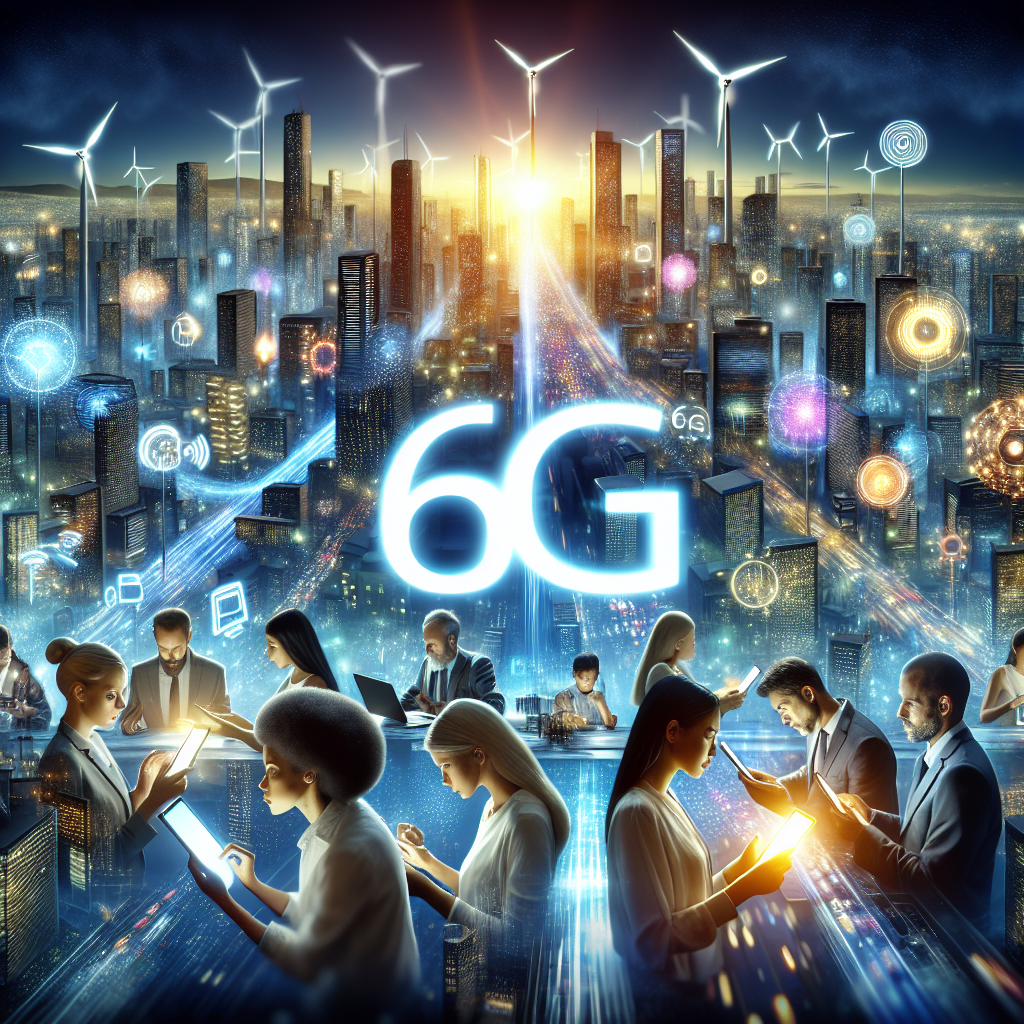
As the world inches closer to the deployment of 6G technology, anticipated around 2030, the excitement within the mobile development community is palpable. 6G promises to not only enhance existing functionalities but also introduce new features that will radically transform how mobile applications are designed, developed, and used. This article delves into the expected impact of 6G on mobile development, exploring its potential to drive innovation and create more immersive, efficient, and dynamic mobile experiences.
Transformative Speed and Latency
6G is expected to achieve peak data rates of up to 1 terabit per second—over 100 times faster than 5G. This unprecedented speed will allow mobile developers to design applications that were previously constrained by data transmission limits. Enhanced speeds mean smoother user experiences in video streaming apps, augmented reality (AR), and virtual reality (VR), which can now operate with virtually no latency.
Moreover, the ultra-low latency of 6G will be crucial for the development of applications requiring real-time responsiveness, such as those involving autonomous vehicles, remote healthcare, and AI-driven decision-making processes. Mobile applications will be able to handle more complex computations on the fly, significantly broadening the scope of what apps can achieve.
Proliferation of Connected Devices and IoT
With 6G, the Internet of Things (IoT) will see an exponential increase in the number of interconnected devices, thanks to the broader bandwidth and improved energy efficiencies. For mobile developers, this expansion in IoT represents an opportunity to create more integrated and universally connected apps. Homes, cities, cars, and personal appliances will communicate seamlessly, providing a fertile ground for innovative mobile solutions that automate and streamline day-to-day activities.
Enhanced Location Accuracy
6G technology plans to introduce highly precise positioning capabilities, potentially accurate to within centimeters. This advancement opens up new possibilities for mobile development in sectors like logistics, augmented reality, and personalized advertising, where location accuracy can significantly enhance the user experience. Apps could offer highly tailored content based on precise indoor and outdoor locations, serving users more contextually relevant information.
Revamped Network Reliability
The reliability of network services is set to improve drastically with the implementation of 6G. Mobile developers can look forward to fewer service disruptions, reduced packet loss, and a more robust connection under moving conditions. This reliability will especially benefit applications in public safety, transportation, and real-time communication platforms, where consistent connectivity is paramount.
Sustainable Development
6G is also expected to emphasize energy efficiency and low carbon footprints in its infrastructure. Mobile applications will need to align with these sustainability goals. Thus, there is a growing trend toward developing "green" apps that minimize energy consumption and lessen environmental impact, aligning with global sustainability efforts.
FAQ
What is 6G and how does it differ from 5G? 6G refers to the sixth generation of wireless technology. It promises much higher speeds, lower latency, and greater capacities than 5G, supporting more connected devices and enabling more complex mobile applications.
When is 6G expected to be available? Research and innovation continue, but the general industry consensus is that 6G could start rolling out by 2030.
How will 6G affect app development? 6G will enable developers to create more complex, immersive, and responsive applications. It will open up new possibilities in AR, VR, real-time analytics, IoT, and ultra-personalized user experiences.
Can 6G technologies help in energy conservation? Yes, one of the goals of 6G is to be more energy-efficient and environmentally friendly than previous generations. Mobile applications developed under 6G will likely need to focus on optimizing energy use to align with these goals.
Will existing mobile devices be compatible with 6G? Most current devices are not equipped to handle 6G, as it will require new hardware and chipsets. Future devices designed for 6G compatibility will start to appear as the technology gets closer to becoming mainstream.
Further Reading
- The Evolution of Serverless Computing in 2026
- Next Gen Frontend: React 19 and Beyond
- Quantum Machine Learning Explained