Graph Neural Networks (GNNs) in Practice: Revolutionizing Data Interpretation
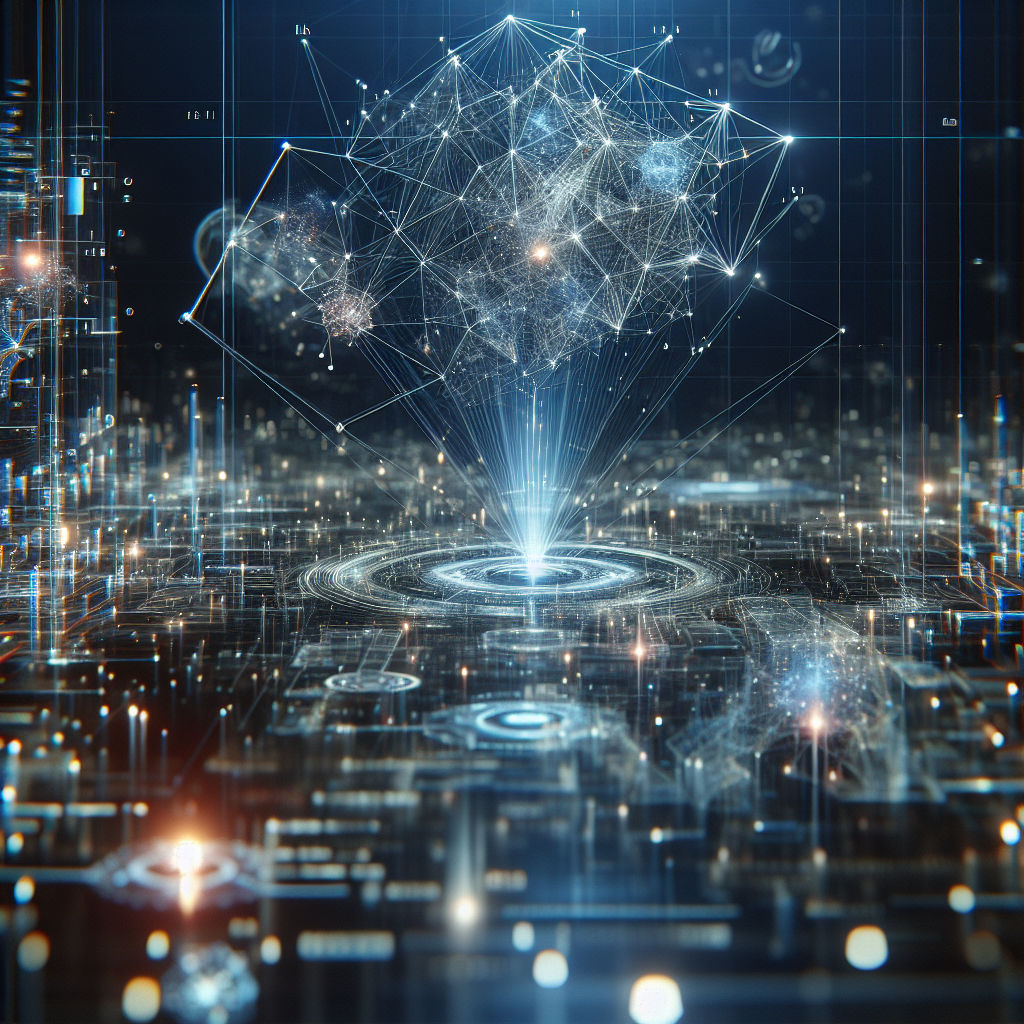
Graph Neural Networks (GNNs) have emerged as a powerful tool for processing data represented in graph forms. By directly leveraging the structure of the data, GNNs can extract insights that are often inaccessible to traditional neural network models. This article dives deep into the practical applications of GNNs across various sectors, illustrating how they are fundamentally changing our approach to complex relational data problems.
What Are Graph Neural Networks?
Graph Neural Networks (GNNs) are a type of neural network designed to perform inference on data that can be represented as a graph. They are particularly adept at handling relational information, making them versatile for use cases in which data points are interlinked, such as social networks, biochemical structures, and communication networks.
Key Applications of GNNs in Industry
Social Network Analysis
In social media platforms, GNNs can analyze social structures and user relationships to recommend new friends and content, detect communities, or identify influential users. This capability enhances user engagement and platform dynamism by fostering more personalized interactions.
Fraud Detection
Financial institutions leverage GNNs to improve fraud detection systems. By representing transactions as graphs, with nodes as accounts and edges as transactions, GNNs can identify unusual patterns and hidden relationships indicative of fraudulent activities.
Drug Discovery
In pharmaceuticals, GNNs aid in predicting molecule interactions. By treating molecules as graphs, with atoms as nodes and bonds as edges, scientists can predict molecular properties or drug efficacy, speeding up the drug discovery process significantly.
Supply Chain Optimization
Supply chains benefit from GNNs by modeling the entire network of suppliers, manufacturers, and distributors as a graph. This modeling helps in optimizing routes, predicting delays, and managing inventory more effectively, ensuring smoother operation and reduced costs.
Recommendation Systems
Major e-commerce and streaming companies use GNNs to enhance their recommendation engines. By analyzing the graph of user interactions with products or media, GNNs provide more accurate recommendations, tailored to user preferences and behaviors.
Challenges and Opportunities
While GNNs offer substantial benefits, they also present challenges such as handling large-scale graphs, ensuring model interpretability, and preventing overfitting. However, ongoing research and development promise to mitigate these issues, broadening the practical applicability of GNNs.
FAQ
What makes GNNs different from other neural networks?
GNNs are uniquely designed to handle structured graph data, where relationships between entities play a critical role, unlike traditional neural networks which generally assume independent data samples.
Can GNNs be used for real-time applications?
Yes, with sufficient computational resources, GNNs can be implemented for real-time applications such as real-time recommendation systems or fraud detection in transactions.
How do GNNs handle dynamic graphs where relationships change over time?
GNNs can be extended to dynamic graphs through architectures that incorporate temporal changes either by adjusting the graph structure at each time step or by embedding time-related properties into nodes and edges.
Are there any specific industries where GNNs are not advised to be used?
GNNs are generally not well-suited for industries where data isn’t naturally graph-structured or where the relationships between data points don’t significantly influence the outcome.
What are the computational requirements for implementing GNNs?
Implementing GNNs typically requires significant computational power, especially as the size and complexity of the graph increase. Efficient hardware and optimized algorithms are crucial for practical deployments.
Further Reading
- Artificial Intelligence in Healthcare
- Building Resilient Distributed Systems
- The Future of Open Source AI Models
GNNs continue to be a topic of intense research and growing application, promising exciting new capabilities and advancements across various fields. As technology evolves, the potential for GNNs in practical settings will only expand, making them a pivotal component of the AI toolkit.