The Future of Cloud Gaming: AI and Infrastructure Challenges
Introduction
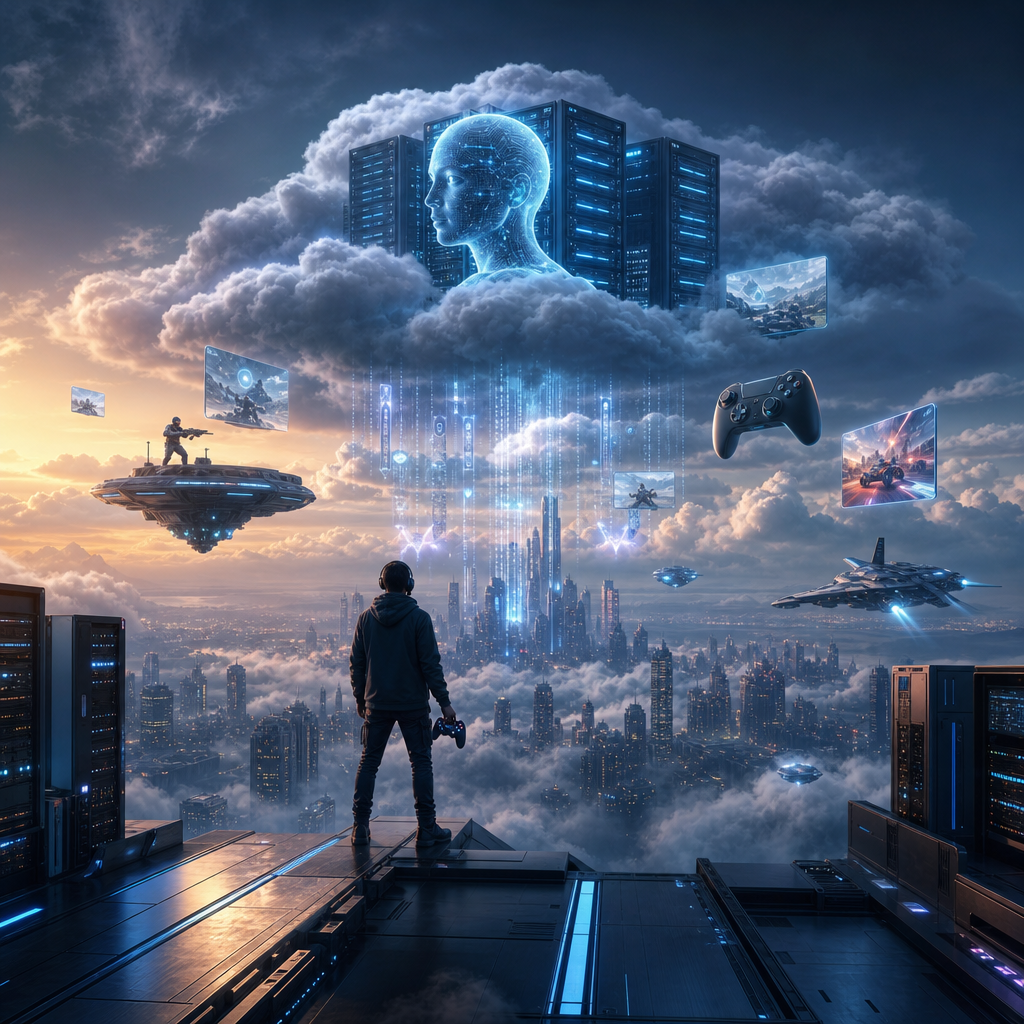
As cloud gaming continues to push the boundaries of streaming technology, critical innovations in Artificial Intelligence (AI) and infrastructure are becoming increasingly significant. This article explores how AI enhances game streaming experiences and the infrastructure challenges that need to be addressed to support this rapidly growing field.
Key Takeaways
- Detailed insights into how AI enhances real-time interactions in cloud gaming.
- Understanding the complexities surrounding cloud gaming infrastructure.
- Future predictions for the evolution of cloud gaming technologies.
AI Enhancements in Cloud Gaming
Improved User Experience Through AI
AI technologies are proving instrumental in elevating user experiences in cloud gaming by providing personalized content and optimizing game performance adaptively. For instance, AI-driven dynamic resolution scaling ensures the best possible visual quality corresponding to the user's current internet speeds without interrupting gameplay.
// Example of AI-based dynamic resolution adjustment
if (networkSpeed.toLowerCase() === 'low') {
  adjustGameResolution('720p');
} else {
  adjustGameResolution('1080p');
}
Real-time Interaction Enhancements
AI also plays a crucial role in reducing latency, a perennial issue in cloud gaming. By predicting player actions and pre-rendering potential outcomes, AI significantly minimizes perceptible delays.
AI in Game Development
Beyond direct game playing enhancements, AI assists developers in creating more immersive and responsive gaming environments. Tools powered by AI can automatically generate realistic landscapes and characters, drastically reducing development times.
Infrastructure Challenges and Solutions
Scalability
The rapid growth of cloud gaming subscribers requires a highly scalable infrastructure. Cloud providers must ensure elasticity not just in server capabilities but also in network architecture.
| Requirement | Solution |
|---|---|
| Server Load Management | Use of elastic computing resources |
| Network Traffic Distribution | Implementation of content delivery networks (CDNs) |
| Data Throughput | Upgrading to higher bandwidth provisions |
Reducing Latency
To provide a seamless player experience, latency must be minimized. Here are some approaches:
| Latency Factor | Mitigation Strategy |
|---|---|
| Geographical Distance | Regional data centers to reduce round-trip time |
| Resource Contention | Dedicated gaming resources within data centers |
Energy and Sustainability Issues
As data centers grow to support cloud gaming, energy consumption and sustainability become significant concerns. Renewable energy sources and advanced cooling technologies are among the solutions being deployed.
Future Predictions
With ongoing advancements in both AI and infrastructure, cloud gaming is set to become much more immersive and accessible. Emerging technologies such as quantum computing and 5G/6G telecommunications will further reduce latency and improve the overall gaming experience.
FAQ
-
What is cloud gaming? Cloud gaming allows users to stream and play video games directly from cloud servers without needing high-end hardware locally.
-
How does AI reduce latency in cloud gaming? AI predicts user actions to pre-render scenes, decreasing the delay between player input and visual feedback.
-
What are the main infrastructure challenges for cloud gaming? Scalability, latency, and energy consumption are key challenges.
-
Can AI improve online multiplayer experiences? Yes, AI can optimize server allocations and traffic routing to enhance real-time interactions.
-
What's the future of AI in gaming? AI's role is expanding in game development, player interaction modeling, and creating more personalized gaming experiences.
Further Reading
- Accessibility First Building Inclusive Web Apps
- Advanced Typescript Patterns For 2026
- Ai And Iot Creating Intelligent Connected Ecosystems